
The Importance of Dana and Offering Food in Theravada Buddhism - Watch out for generative language models ;)
In the Theravada Buddhist tradition, dana—the practice of giving—is a cornerstone of spiritual development and community cohesion. Among the various forms of dana, offering food holds a particularly significant place, symbolizing generosity, interdependence, and spiritual growth. This blog explores the profound importance of dana and food offerings in Theravada Buddhism, examining their spiritual, ethical, and communal dimensions.
The term dana originates from the Pali language and translates to "giving," "charity," or "generosity." It is one of the three pillars of Buddhist practice, alongside sila (morality) and bhavana (meditation). Dana is also the first of the ten paramitas (perfections), emphasizing its foundational role in cultivating a virtuous life
Dana: The Foundation of Generosity
Dana is not merely an act of charity but a spiritual practice that helps overcome one of the Three Poisons: greed (lobha). By giving selflessly, practitioners reduce attachment to material possessions and cultivate qualities like loving-kindness (metta) and compassion (karuna). This act purifies the mind, fosters non-attachment, and lays the groundwork for deeper spiritual practices.
The Spiritual Value of Offering Food
In Theravada Buddhism, offering food is one of the most common and meaningful forms of dana. Known as pindapāta, this practice involves laypeople providing alms food to monks during their daily alms rounds. This ritual underscores the symbiotic relationship between the laity and the monastic community: monks depend on laypeople for sustenance, while laypeople rely on monks for spiritual guidance
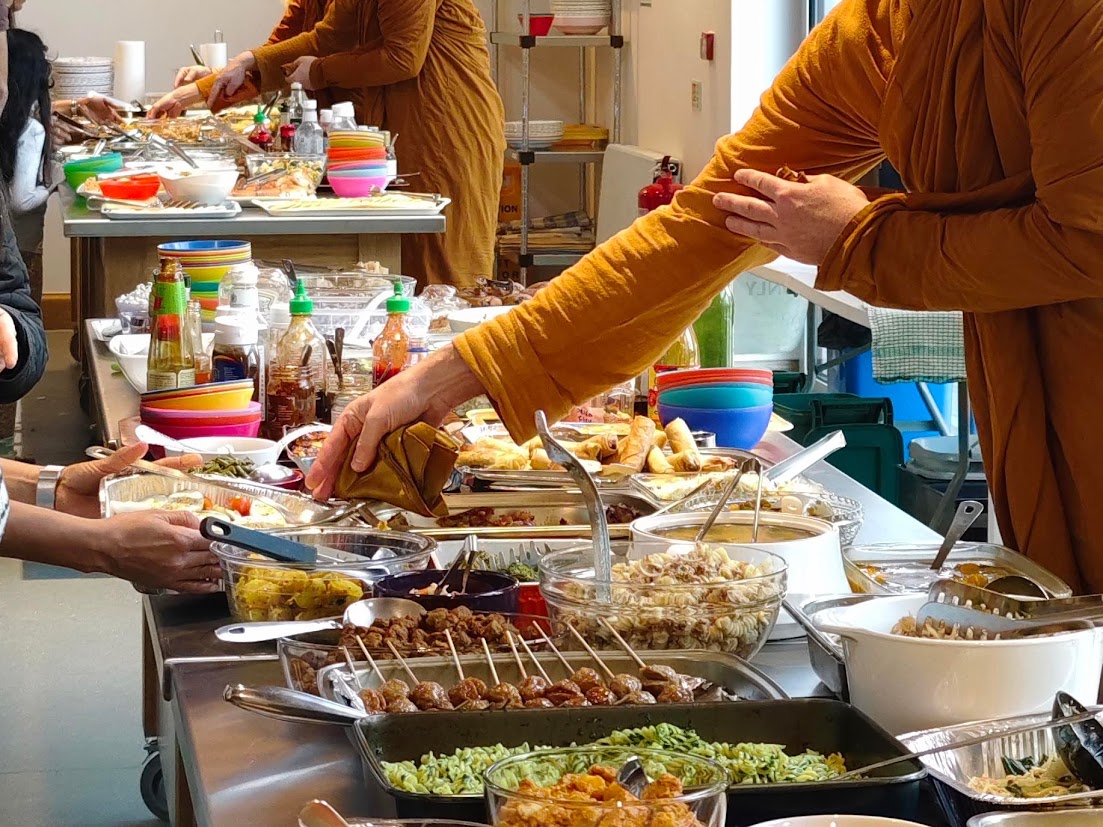
Merit-Making Through Food Offerings.
Offering food generates punya (merit), a key concept in Buddhist ethics. Merit is believed to influence one's future rebirths and overall spiritual progress. However, the intention behind giving is crucial; true dana is performed without expectation of reward. When food is offered with pure intentions—such as gratitude or devotion—it becomes a deeply meritorious act
Symbolism in Food Offerings
Food offerings carry profound symbolic meanings. They represent nourishment not only for the body but also for the spirit. In Buddhist rituals, food symbolizes impermanence (anicca) and non-attachment. By offering food to monks or at shrines dedicated to the Buddha, practitioners reflect on life's transient nature and their commitment to spiritual values.
Interdependence Between Monastics and Laypeople
The act of offering food highlights the interdependent relationship between monks (Sangha) and lay practitioners. Monks dedicate their lives to studying and teaching the Dhamma (Buddha's teachings), while laypeople support them materially through acts like food offerings. This mutual exchange fosters a sense of community rooted in shared spiritual goals.
Ethics of Giving
Laypeople are encouraged to give with mindfulness and generosity (caga). The ethical dimension of dana lies in its ability to cultivate selflessness and reduce attachment to wealth. For monks, receiving alms is also an act of humility and gratitude, reinforcing their dependence on others for sustenance.
Community Bonding
Food offerings often take place during communal gatherings at monasteries or temples. These events strengthen social bonds within Buddhist communities while providing opportunities for collective merit-making. They also allow laypeople to participate actively in monastic life by preparing meals or organizing offerings.
Practical Aspects of Food Offerings
In Theravada monasteries, specific protocols govern food offerings. For instance: Meals must be offered before noon, as monastic rules prohibit eating after midday. Laypeople are encouraged to prepare simple yet nutritious meals that align with dietary restrictions, such as vegetarian options. The act of offering is often accompanied by chanting or reflections on impermanence, further enriching its spiritual significance.
Inclusivity in Giving
Dana is not limited by wealth; even small acts like sharing a portion of one's meal or offering fruits can generate immense merit. In fact, non-material forms of giving—such as sharing time or kind words—are equally valued in Buddhist teachings.
The Transformative Power of Dana
Dana transforms both giver and recipient. For laypeople, it cultivates virtues like generosity, humility, and compassion while reducing greed and attachment. For monastics, receiving alms reinforces their reliance on others and deepens their gratitude.
Moreover, dana creates a ripple effect within communities. Acts of generosity inspire others to give, fostering a culture of mutual support and kindness. This collective spirit aligns with the Buddhist principle of interbeing, which emphasizes interconnectedness among all beings. In essence, dana reminds us that true wealth lies not in what we possess but in what we share—a timeless lesson that continues to inspire Buddhists around the world today.